

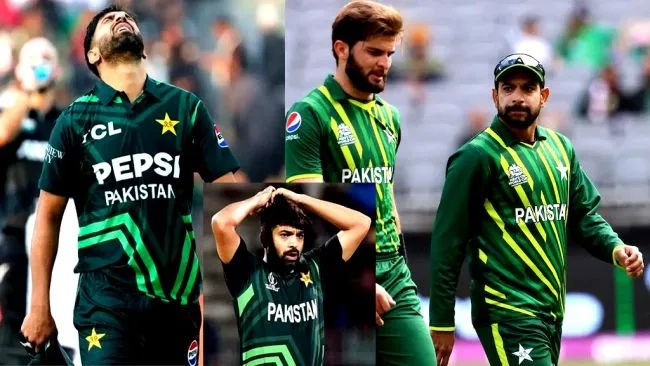
The Fall of the Speedster: Inside the Selection Gambit That Could Sideline Haris Rauf from the 2026 World Cup In the high- stakes, enduring theater of Pakistani justice, narratives of rise and fall are written at snappy pace.
Many bends have been as dizzy as that of Haris Rauf. From a viral YouTube clip and a advance in the Big Bash League to getting Pakistan’s premier fast bowler in white- ball justice, his trip was a ultramodern fairytale of raw pace and heart.
Global 2026 T20 World Cup
His slingy action and 150 kph thunderbolts made him a global T20 icon and a central pillar of Pakistan’s bowling attack. Yet, as the cricketing world begins its long aspect toward the 2026 T20 World Cup, a stark and unsettling possibility looms the express paceman, formerly supposed necessary, could be watching from the sidelines.
This is not just a dip in form;
it’s a complex,multi-layered selection scheme embedded in fitness, fearlessness, and a abecedarian shift in the gospel of Pakistani pace bowling. The fall of the scrambler is n’t an accident; it’s a calculated threat that could review Pakistan’s attack for a generation.
The Pillars of Rauf’s Rise What Made Him necessary
To understand the implicit fall, one must first appreciate the height from which he soared. Haris Rauf’s value was erected on three explosive pillars
The Raw, Theatre of Pace In an period decreasingly dominated by variations and “ smart ” bowling, Rauf was a noble anachronism — a pure, adrenaline- fueled fast bowler.
His capability to constantly transgress the 150 kph mark, frequently in the death overs, was a armament of mass dislocation. Batsmen stressed his sheer speed, a cerebral edge many Pakistani bowlers have held since Shoaib Akhtar.
The Big- Match Disposition Rauf sounded to thrive under the brightest lights.
He was the bowler captains turned to when they demanded a gate or to quell a rampant cooperation. The White- Ball Specialist Archetype In the age of format specialization, Rauf perfected the T20 and ODI design.
He was n’t a Test- match idler, and the system accepted that, freeing him to hone his chops for the shorter formats where his impact was minimal.
The Cracks in the Armor The Unraveling Triggers
The descent from this zenith began with a convergence of factors that turned strengths into vulnerabilities.
1. The Injury Vortex and the corrosion of Pace
Fast bowling is a brutal trade, and Rauf’s high- impact action has taken a risk. A recreating shoulder injury has been particularly enervating.
The most visible consequence has been a conspicuous dip in his average speed. The 155 kph thunderbolts have come rarer, replaced by deliveries in the high 130s tomid-140s. For a bowler whose primary armament is intimidation through pace, this is empirical . A fast bowler who loses his speed without a sophisticated secondary skill set becomes predictable.
2. The Tactical Naivety Exposed
When the pace declined, a critical excrescence was laid bare a lack of a developed “ Plan B. ” Rauf’s force, erected around the bouncer and fast yorker, has shown limited elaboration.
On unresponsive pitches or against batters complete at handling pace, he has appeared one- dimensional. His frugality rates, especially in the death overs, have ballooned in recent series, as batters now line him up with lower fear, targeting his predictable lines and lengths.
Readmore The Toss Heard, The Hands Unheld: The Silent Drama at the U19 World Cup Toss
3. The Central Contract Standoff and Perceived “ Red- Line ” intelligence
The most politically charged fracture was his turndown to be part of Pakistan’s Test team for the Australia stint in 2023- 24, citing fitness enterprises and workload operation.
The PCB, under also- Chairman Zaka Ashraf, viewed this as a breach of public duty, leading to his reduction in the central contract order and a veritably public rebuke.
This framed Rauf not just as an injured athlete, but as a player with “ red lines ” — a perception that can be fatal in the platoon-first culture Pakistani pickers decreasingly demand.
4. The Rise of the New Wave Naseem, Shaheen, and the Shifting Paradigm
Maybe the most important force working against Rauf is the emergence and development of Pakistan’s other pace stars.
Shaheen Shah Afridi is the undisputed leader and a more complete bowler.
Naseem Shah, when fit, combines express pace with superior control and confluence movement. Mohammad Abbas and arising bents like Mohammad Wasim Jr. and Zaman Khan offer different, skilful confines.
The attack is no longer erected around Rauf’s shock value. He’s now one option among numerous, and presently, not the most dependable bone.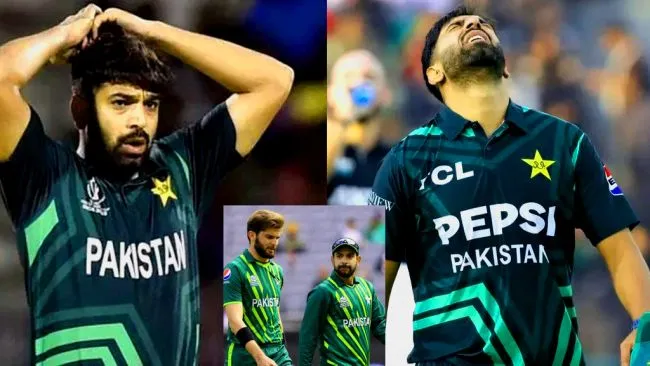
The Selection Gambit Why 2026 is in Jeopardy
The path to the 2026 T20 World Cup is a long one, but the selection gospel is formerly shaping , and it does n’t favor Rauf in his current state.
The Fitness Ultimatum The new selection commission, likely under the influence of numbers like Wahab Riaz( a idler himself), is anticipated to prioritize continuity andmulti-format readiness.
A bowler perceived as fragile or picky in his commitments may be seen as a luxury Pakistan can not go in a long- term Selection World Cup make- up.
The Data- Driven Cull Modern selection is ruthless.
Judges will point to rising frugality rates, falling gate censuses, and inconsistent performances. In a data- driven terrain, sentiment for once glory holds little weight.However, Selection fitter, and statistically more effective options crop in the PSL and bilateral Selection series over the coming two times, If youngish.
The “ Fearless Cricket ” Paradox The current platoon morality,
Emphasized by captains like Babar Azam and Shaheen, is “ intrepid justice. ” Ironically, a bowler who formerly inseminated fear is now seen by some as a politic liability who can blunder runs when his primary armament is cauterized, making the Selection platoon fearful of using him in pivotal phases.
