

When the Beautiful Game Draws a Red Card: The Call to Boycott 2026 Over Politics at the Border The 2026 FIFA World Cup is poised to be a major spectacle.
For the first time, three nations — the United States, Canada, and Mexico — will concertedly host the globe’s most- watched sporting event.
Promotional material shafts with fancies of concinnity a mainland- gauging festivity of sport, bridging societies in iconic colosseums from Toronto to Guadalajara to Los Angeles. Yet, beneath this spangling face,
A growing chorus of activists, politicians, and suckers is calling for commodity drastic a boycott.
Their reason? The sharp, frequently cruel, contradictions between soccer’s communication of concinnity and the stark realities of political division, particularly girding migration and border programs in the host nations.
This is n’t a simple debate. It strikes at the heart of what ultramodernmega-events represent, and whether the” beautiful game” can — or should — be separated from the politics of the nations that carry it.
The Beautiful Game’s Promise vs. Political Reality
Soccer sells itself on a important, universalist ideal. FIFA’s own watchword,” Football Unites the World,” adorns its dispatches. The sport prides itself on being a borderless language, where gift and passion trump passports.
The World Cup, in its stylish moments, offers transitory casts of this ideal a participated global watercooler moment, an sacrifice’s triumph that inspires millions, rival suckers participating a pint.
But the 2026 hosts present a profound challenge to this narrative.
The event’s core terrain — North America is a region defined by one of the world’s most politically charged, reequipped , and humanitarianly fraught borders that between the United States and Mexico.
The central contradiction is this How can a sport that celebrates global concinnity and mobility be genuinely hosted by nations whose common border is a symbol of deep division, where programs have led to family separations, dangerous emigrant trails, and a bitter, ongoing political war over walls and enforcement?
For boycott proponents, this is not an abstract political disagreement.
It’s a direct moral conflict. They point to programs like” Remain in Mexico,” the construction of border walls, and aggressive expatriation administrations as contrary to the spirit of the game.
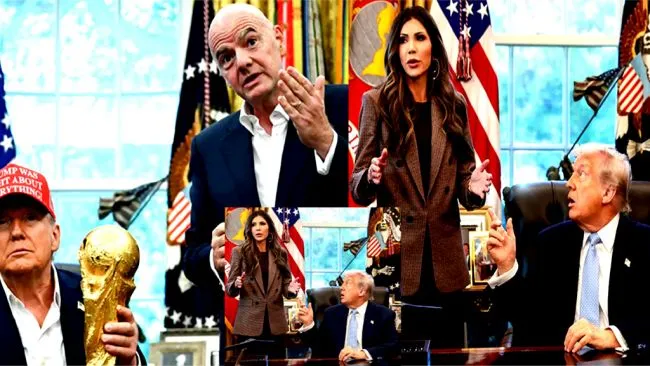
To them, awarding the event to these nations, and spending billions on colosseum upgrades while mortal suffering persists at the border, represents a disastrous failure of FIFA’s purported values. It is, in their eyes,” sportswashing” using the glamour and goodwill of a major event to sanitize controversial programs.
The Voices Calling for a Boycott
The call to boycott is n’t monolithic. It comes from several distinct, occasionally lapping, diggings
mortal Rights and Migratory Advocacy Groups Associations like Amnesty International and the Hope Border Institute have long proved rights abuses at the border. For them, the World Cup is a switch for attention.
They argue that the global limelight of 2026 must be used to force palpable policy changes, and that a believable boycott trouble is one of the many tools important enough to press governments and FIFA.
Player- Led Activism
The ultramodern soccer player is decreasingly politically conscious. While no megastar has yet called for a full 2026 boycott, the precedent is set. Players from the USMNT and other public armies have worn armbands, made statements, and used their platforms to advocate for social justice.
The question looms Could a critical mass of elite players,
maybe from nations with strong views on migratory rights, refuse to share? The power of such a move would be seismic.
Grassroots Addict Movements Across social media and addict forums, hashtags like#Boycott2026 circulate. These arguments are passionate and moral. suckers ask” How can I celebrate a jubilee of global concinnity in a country that erected a wall to keep people out?
Readmore The Fall of the Speedster: Inside the Selection Gambit
Political numbers Some politicians,
particularly from the left in the U.S. and in Latin American nations, have raised support for using the World Cup as a logrolling chip. Their argument is geopolitical the prestige and profitable boon of the event should be contingent on humane immigration reform.
The Counterargument Engagement Over insulation
Opponents of a boycott, including FIFA officers, event organizers, and numerous within the soccer establishment, offer a realistic and ideological disproof. Their core thesis is that engagement is more important than insulation.
The Platform Principle
They argue that the World Cup’s immense media footmark is n’t a price but a platform — a global stage to punctuate issues. rather of vacating that stage, activists and conscious players should seize it.
Imagine demurrers in colosseums seen by billions, player press conferences addressing border programs, and talkie crews shining a light on migratory stories alongside the matches. A boycott, they say, cedes this unequaled platform.
Profitable Impact and Original Communities .
A successful boycott would hurt the very communities proponents aim to help. The event is anticipated to induce billions in profit, produce jobs, and boost original husbandry in all three host countries, including border metropolises. hostel workers, hack motorists, small merchandisers — numerous from indigenous backgrounds themselves — would bear the mass of a lowered event.
