

A Cool Box, A Broken TV, and a Silent Phone: Cataloging Imran Khan’s 950 Days in Adiala He has noway left guardianship since.
As of February 2026, the 73- time-old former high minister and cricketing icon has spent roughly 950 days — further than two and a half times confined within the high walls of Rawalpindi’s Adiala Jail. What began as a singular legal verdict has calcified into one of the most prolonged, scanned, and plaintively queried detentions in Pakistan’s political history.
In February 2026, a court- appointed counsel entered
Imran Khan cell and produced a seven- runner report that strictly entered his actuality. It’s an force of mundane objects and missing rudiments a cool box that does n’t cool, a TV that does n’t play, a phone that does n’t ring. But these particulars are n’t simply cabinetwork.
They’re the material substantiation of a political detention that has drawn commination from United Nations rapporteurs, sparked legal battles across multiple high courts, and exposed the deep fractures within Pakistan’s justice system.
This is n’t a story about guilt or innocence.
It’s a story about what happens to a man when the state locks the door and sluggishly, incrementally, turns off the connections that tether him to the world.
I. The Cool Box Summer in a Concrete Room
In the sanctioned report submitted to the Supreme Court by amicus curiae Salman Safdar, Imran Khan cell is described as having “ sufficient lighting and ventilation ”. There’s a bed, a president, a table, a hanger. There’s a marshland receptacle with hot and cold water. There’s a small heater for downtime.
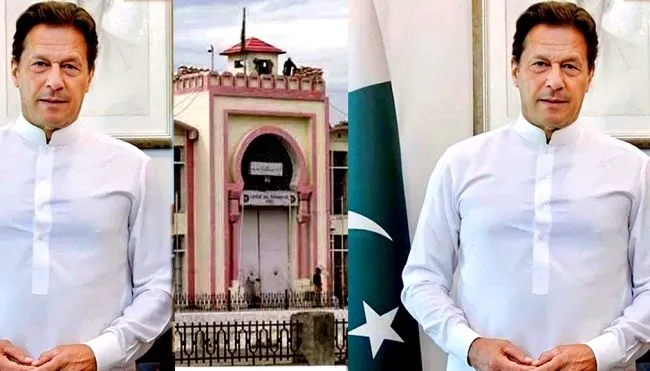
But summer is different.
The report notes that Imran Khan living conditions come “ particularly delicate ” during the hot months due to extreme heat, moisture, insects, and mosquitoes. A room cooler is installed, but it’s shy. Mosquito repellent is handed, but the insects persist. And also there’s the cool box.
Imran Khan informed Safdar that no refrigerator is handed in his confinement cell. rather, he’s given a cool box — a simple, frequently ineffective device that relies on ice packs or minimum electrical cooling. During extreme rainfall, Imran Khan said, the cool box was “ not always effective ”. On two or three occasions over the summer months, he suffered food poisoning,
which he attributed to the lack of proper refrigeration.
A cool box is n’t designed for indefinite use. It’s a temporary result for a fun and games, not a endless institution in a captivity cell holding a former head of government for three successive summers. Its presence and its failure is a small but telling detail. It speaks to a system that provides just enough to claim compliance, but not enough to insure quality.
II. The Broken TV insulation and Information
On January 19, 2026, fourteen PTI legislators filed a solicitation in the Islamabad High Court challenging Imran Khan solitary confinement. The solicitation contended that Imran Khan had been held in conditions that amounted to “ cruel, inhuman and demeaning discipline ” and that he was being denied access to books, journals, and — significantly — TV.
A TV set is a minor comfort in utmost incarcerations.
In Adiala, its absence — or dysfunction is part of a broader pattern. The UN Special Rapporteur on Torture, Alice Jill Edwards, reported in December 2025 that Imran Khan was being subordinated to 23 hours of solitary confinement per day, with nonstop camera surveillance and “ complete insulation from the outside world ”.
The UN report stated that solitary confinement exceeding 15 days constitutes cerebral torture.Imran Khan had endured it for months at that point — now, as of February 2026, the amicus report recorded that he’d been in solitary confinement for roughly two times and four months.
A broken or absent TV is n’t simply an amenity denied.
In solitary confinement, where mortal contact is measured in twinkles per day, the TV becomes a lifeline — a window into a world that has moved on without you.
III. The Silent Phone A Father’s Right
maybe the most painful entry in the roster of privation enterprises not what Imran Khan lacks, but who he can not reach.
On February 11, 2026, the Supreme Court directed that Imran Khan be permitted to make telephone calls to his children. Chief Justice Yahya Afridi emphasized the significance of family communication, and Attorney General Mansoor Usman Awan assured the bench of the government’s cooperation. The deadline was set February 16.
That such an order was necessary at each is revealing.
For the vast maturity of his 950 days in detention, Imran Khan phone has been silent. His sons — Qasim and Sulaiman — live abroad. His capability to speak with them has been subject to opaque executive discretion, occasional court orders, and frequent inhibition.
The UN raised this concern in November 2025,
noting that Imran Khan was being denied visits from family members, including his sisters and children. PTI legislators contended in Parliament “ Allow family, including phone calls to his children, immediate and full access ”.
The party’s February 2026 statement following the amicus report explicitly demanded restoration of family visit rights and unchecked access to legal counsel.
A silent phone is n’t a specialized failure.
It’s a deliberate ramifying of the most abecedarian mortal bond. In the roster of 950 days, it’s maybe the heaviest entry.
IV. The 15 Vision The Medical Tragedy
None of the antedating losses, still, has generated the public outrage that followed the disclosure of Imran Khan eye condition.
Readmore Stitching the New Silk Road: Inside the 28-Accord Pact
The amicus report, submitted on February 11, 2026, contained a ruinous medical summary. Imran Khan, who had normal vision as lately as October 2025, began passing blurred vision in November.
He reported this to jail authorities.
According to PTI Secretary General Barrister Salman Akram Raja, Imran Khan was originally treated only with eye drops intended for simple vexation. No retina specialist was consulted. No sanitarium visit was arranged.
The condition worsened through December. By January, Imran Khan had lost utmost of the vision in his right eye.
