

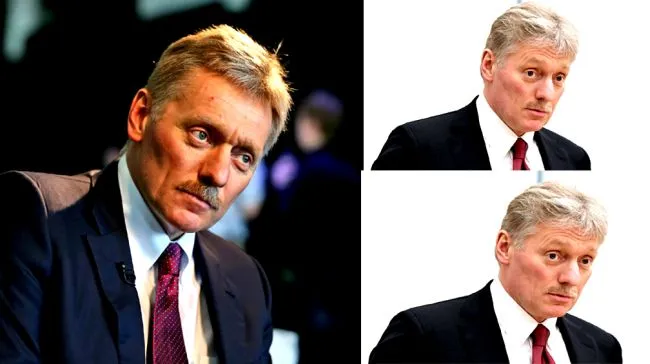
Peskov’s Pledge, Washington’s Doubt: Why the Kremlin’s Nuclear Denial Falls on Deaf Ears at the State Department The United States had claimed new information regarding underground.
Nuclear tests some allegedly conducted by Russia, others by China. We know that these claims have also been forcefully rejected by a representative of the People’s Republic of China”.
On its face, this was a straightforward denial from an sanctioned spokesperson.
But in the environment of February 2026,
Peskov’s words landed not as consolation, but as another data point in a heightening extremity of trust between Washington and Moscow. Just two weeks before, the last remaining nuclear arms control convention between the United States and Russia had expired.
The Kremlin’s offer to extend the New START convention’s limits — made constantly, intimately, and without response from Washington — hung in the air like an unanswered question. And beneath both the denial and the convention’s demise lay a more abecedarian issue the United States no longer believes what the Kremlin says.
This is n’t politic dubitation.
It’s institutionalized mistrustfulness. Washington And it’s reshaping the nuclear geography at the most dangerous moment in decades.
I. The Denial What Peskov Actually Said
The specific allegation that urged Peskov’s February 18 denial remains kindly
opaque. According to reports, the United States claimed to retain new information regarding underground nuclear tests conducted in China in June 2020 — tests that both Beijing and Moscow have constantly denied.
Peskov’s response was precisely calibrated.
\He did n’t simply deny Russian involvement; he explicitly defended China’s position as well.” We’ve heard multitudinous references to certain tests. Washington Neither Russia nor China has conducted any nuclear tests,” he stated, adding that Chinese representatives had formerly” forcefully rejected” the claims.
The denial was comprehensive, unequivocal, and delivered through sanctioned channels.
By any measure, it should have carried weight. But in Washington, the response was n’t acceptance. It was silence.
II. The Context Why Words No Longer Suffice
To understand why Peskov’s pledge falls on deaf cognizance, one must examine the geography of February 2026 — a geography defined by the expiration of trust itself.
The Treaty Is Gone
On February 5, 2026, the New START convention — the last remaining nuclear arms control agreement between the world’s two largest nuclear powers expired. Washington For the first time in decades, the United States and Russia are without any fairly binding limits on their strategic nuclear magazines.
The convention, which limited each side
at 1,550 stationed strategic warheads and 800 delivery systems, had been extended formerly ahead, in 2021, for five times. farther extension was n’t possible under the convention’s terms, but the two countries could have agreed to continue clinging to its limits informally. Russia constantly gestured amenability to do so.
On February 3, just days before expiration,
Peskov reiterated President Putin’s offer for a one- time extension of the convention’s central limits, advising that without it,” the world will probably be in a more dangerous situation than it has been so far”.
Readmore “Not a Suicide”: The 91-Year-Old Pathologist Who Spent Seven
Washington noway responded.
Secretary of State Marco Rubio made the administration’s position clear” The chairman has been clear in the history that in order to have true arms control in the 21st century, it’s insolvable to do commodity that does not include China because of their vast and fleetly growing cache”.
Beijing has constantly refused to share in trilateral addresses. And so the convention failed — not with a bang, but with anon-response.
The Anchorage riddle
Compounding the trust deficiency is the shadow of secret agreements. In recent weeks, both Peskov and Foreign Minister Sergey Lavrov have constantly substantiated unidentified” understandings” reached during a meeting in Anchorage, Alaska, in August 2025 between Putin and President Trump.
According to Lavrov, Moscow accepted .
concrete offer( s)” from Washington and believed agreements had been reached.However, also the issue should be resolved,” Lavrov stated,” If one approaches it manfully.S. terms only to see new warrants and profitable pressure rather of cooperation.
The United States has noway intimately conceded
These understandings. Whether they were real, misknew, or designedly nebulous remains unclear. What’s clear is that from Moscow’s perspective, Washington made pledges it did n’t keep.
This history — real or perceived — venoms every posterior Kremlin statement.
The Nuclear Arsenal Question
Russia’s repeated asseveration that any unborn arms control must regard for British and French nuclear capabilities further complicates matters. Peskov has been unequivocal” When agitating a unborn system of strategic stability, we can not ignore the nuclear eventuality of US abettors in Europe, videlicet Britain and France”.
For Washington, this is anon-starter.
British and French nuclear forces are independent deterrents, not American means. Including them in U.S.- Russian accommodations would bear London and Paris to accept limits on their autonomous capabilities commodity neither has shown any amenability to do.
Yet from Moscow’s perspective, the demand is logical.However,
while growing, remains lower than Russia’s or America’s why should Russia not contend on including America’s closest abettors ? If the United States insists on including China — whose magazine.
This impasse is n’t simply specialized. It reflects unnaturally inharmonious fancies of what arms control should look like in a multipolar world.
III. The Escalation Warnings and Munitions
While Peskov denies nuclear tests, other Russian officers have been less subdued in their rhetoric.
On January 26, Dmitry Medvedev, deputy president of Russia’s Security Council, issued what the Institute for the Study of War described as” veiled pitfalls” aimed at obliging the United States into concessions on Ukraine in exchange for restoring bilateral relations.
