


A Royal Wave, A Public’s Cheer: The Unlikely Support Symphony Outside Prince Harry’s Courtroom In the hushed, wood- paneled solemnity of a London courtroom,
A legal battle over press intrusion was being waged. Yet, the most reverberative story of the day was unfolding not before the bewigged judges, but on the rain- dampened pavement outside the Royal Courts of Justice.
There, as Prince Harry, Duke of Sussex, arrived to continue his fight against Mirror Group journals, commodity extraordinary and unanticipated happed.
A small crowd, daring the British rainfall, erupted not in the hisses or indifferent silence bone might anticipate for a royal figure who has so intimately departed the pack, but in warm, blatant cheers. And in a moment of robotic, unscripted reciprocity, Harry stopped.
He turned. He gestured.
He smiled. This simple exchange — a royal surge, a public’s cheer — composed an doubtful support symphony that challenged the dominant narrative of a Napoleon adrift and alienated from his motherland. It revealed a complex, enduring thread of public sympathy that persists beneath the bowwow of tabloid review and institutional frost.
This scene was a exemplification of the profound and frequently antithetical public relationship Prince Harry has cultivated since stepping back as a elderly working royal.
It demonstrates that his story, far from being a simplistic tale of fall from grace, is a multifaceted drama where legal victim, global celebrity, and sympathetic sacrifice intersect, creating pockets of fierce fidelity amidst the broader geography of British ambivalence.
Deconstructing the Cheer Who Was Clapping, and Why?
The support outside the courtroom was n’t from a mustered, organized addict club. It was organic, drawn from a sampling of Londoners and curious bystanders. Their applause can be understood as a response to several lapping narratives Harry now embodies.
1. The” David vs. Goliath” Narrative In the courtroom,
Harry is n’t a Napoleon using honor; he’s an individual taking on a important, settled institution — the British tabloid press. For numerous Britons, sick of times of phone- hacking dishonors and press surpluses, Harry’s dogged legal pursuit represents a rare, believable challenge to a deeply unpopular establishment. They cheer for the sacrifice fighting a system they feel has abused its power with immunity.
2. The Trauma Survivor & Family Man Through his bio Extra,
His Netflix talkie, and his courtroom evidence, Harry has strictly detailed the cerebral risk of media importunity, linking it directly to the death of his mama .
This architecture has converted him in the eyes of numerous from a displeased royal into a trauma survivor seeking responsibility.
His contemporaneous part as a father fiercely determined to cover his own children, Archie and Lilibet, from a analogous fate, amplifies this sympathetic, mortal dimension. The cheer is for the man trying to break a vicious cycle.
3. The Exiled Truth- Teller
To a member of the public, particularly youngish demographics and those skeptical of traditional institutions, Harry and Meghan’s exit was a stalwart act of ultramodern integrity.
His legal battles are seen as an extension of his verity- telling — an attempt to hold important realities to regard for their once conduct. The cheer is for the disruptor speaking verity to power, a part that resonates in an age of growing institutional mistrust.
4. The Enduring Affection
for” Our Harry” Despite everything, a force of public affection for the mischievous, gusto- haired boy who walked behind his mama ’s pall persists.
For some in that crowd, the cheer was a simple, mortal response to a familiar figure they watched grow up, a memorial of the person behind the captions. It was a gesture of unconditional, nearly nostalgic, support.
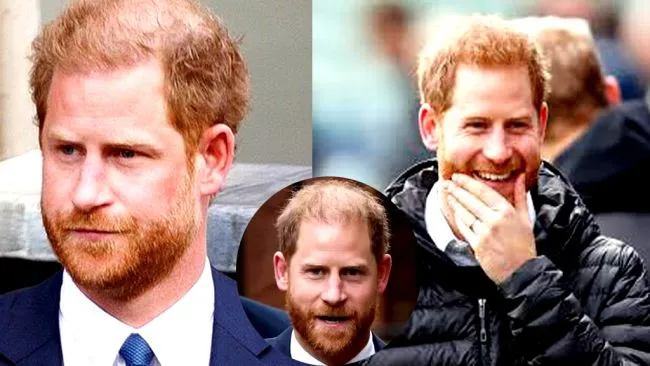
The Wave Harry’s Calculated Reciprocity and New Royal Language
Harry’s response the pause, the surge, the smile was itself a significant piece of communication. It was a masterful, spontaneous deployment of a new,post-royal public language.
Breaking the Fourth Wall Senior working royals operate on a aeroplane of elevated, slightly removed commerce. They admit crowds with a standardized surge, but infrequently break stride for intimate, complementary engagement in such an informal, charged setting.
Readmore Absent in London, Present in Abu Dhabi: The Pippa Middleton
Harry’s pause shattered that protocol. It created a moment of genuine, two- way connection, more akin to a celebrity admitting suckers than a royal performing duty.
Admitting the Support as food In that moment,
Harry communicated that he heard them, that their support signified. This is pivotal for a man who has constantly stated he felt unsubstantiated by the institution.
The surge said,” This support, then, now, is the kind that energies me.” It validated his chosen path by showing a palpable, oral base of stimulant.
The Confidence of Conviction The ease of the gesture gestured a man who, for all his admitted vulnerabilities, is confident in the righteousness of his current battle. He was n’t a persecuted defendant shirking in a back entrance; he was a promoter chatting his sympathizers before facing his adversaries. The surge projected assurance.
The Differ The Courtroom Within and the Crowd Without
The symphony outside was in stark discrepancy to the proceedings outside. In the courtroom, Harry was subordinated to forensic, frequently brutal,cross-examination.
His motives, his memory, and his credibility were deconstructed by hostile QCs representing the review group. The narrative inside was one of legalistic attack and defense.
Outside, the narrative was one of mortal solidarity and emotional confirmation. This contradiction is central to Harry’s current actuality the cold wave, inimical process of seeking justice versus the warm, affirming energy of public sympathy.
The crowd’s cheers acted as a attar against the scrapes of the legal battle, a memorial that his story is believed and supported by numerous, indeed as it’s queried in court.
