

In the shadowy theater of geopolitical conflict,
where physical battles are frequently secondary to the war of narratives, a definitive new charge has been leveled from Tehran. Following a deadly terrorist attack in Iran claimed by the Islamic State( ISIS), the response from the Islamic Republic’s loftiest authority was n’t directed solely at the jihadist perpetrators.
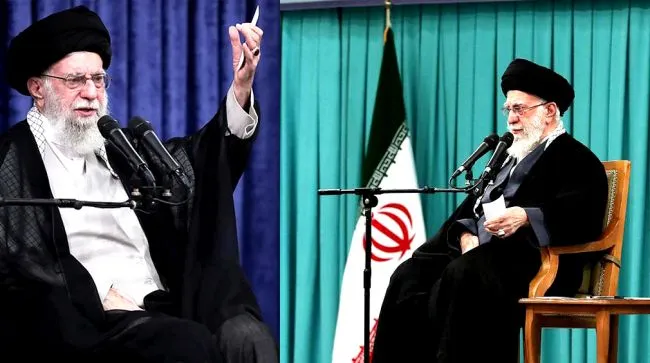
In a stark and deliberate rhetorical shift, Supreme Leader Ayatollah Ali Khamenei, and the state media outfit he controls, refocused a long, accusatory cutlet across the ocean.
They declared the United States, and specifically former President Donald J.
Trump, as bearing” guilt for the casualties.” This is n’t bare bluster or the standardanti-American chow. It’s a sophisticated, advised narrative pivot with profound counteraccusations .
Tehran is trying to mastermind a new unproductive reality one where the ultimate responsibility for bloodshed on Iranian soil is assigned not just to the direct actors, but to the literal conduct of an American chairman.
This blameworthiness transcends the immediate tragedy.
It’s a weaponization of memory, a strategic folding of once U.S. policy into present Iranian victimhood, designed to achieve multiple domestic and transnational Ayatollah objects contemporaneously. To understand its energy, we must anatomize the layers Ayatollah of the Ayatollah’s blameworthiness.
The Catalyzing Event holocaust in Kerman
The immediate detector was a terrible binary bombing in January 2024 at a form commemorating Qasem Soleimani, the important commander of the Islamic Revolutionary Guard Corps’ Quds Force assassinated by a U.S. drone strike in 2020.
The attack, which killed nearly 100 people, Ayatollah was claimed by ISIS- Khorasan( ISIS- K), the revolutionist group’s Afghan chapter. The target, the timing, and the perpetrator created a perfect storm for the Iranian governance’s narrative ministry.
Faced with a mass casualty event at a rally for a public idol,
The governance brazened a dilemma. Admitting vulnerability to a Sunni jihadist group like ISIS could undermine its image of omnipotence and reveal the crevices in its” Axis of Resistance,” which is primarily aimed at Israel and the U.S., not Sunni crazies. The result deflect the fury.
The Architecture of the Blameworthiness Weaving a Unproductive Shade
The Iranian narrative does n’t claim Trump planted the losers. rather, it constructs an intricate chain of” guilt” through several interlinked arguments
The Original Sin The Ayatollah Soleimani Assassination. The foundational pillar is the payoff of Qasem Soleimani itself, ordered by Trump. Tehran has spent four times elevating Soleimani to near- fabulous status as the” idol of the resistance.”
The Kerman form was a testament to this cult of personality.
By linking the bombing to this keepsake, the governance inextricably ties the attack to Trump’s original act. The sense presented is No assassination, no fatality cult, no mass gathering, no target for ISIS.
The” Creation” of ISIS Trope This gates into a longstanding propaganda line in Iran and the broader region that the United States created or designedly fostered the rise of ISIS as a tool to destabilize the Middle East.
Ayatollah By criminating Trump( as a symbol of American power) of general guilt for ISIS’s actuality, the governance paints the attack as a blowback of American policy, a monster of Washington’s own timber turning on its generators’ adversaries.
The” Atmosphere of Chaos” Argument .
A further nuanced thread suggests that Trump’s” maximum pressure” crusade — a policy of ruinous profitable warrants and politic insulation — weakened the Iranian state, stretched its security coffers, and created internal insecurity that groups like ISIS could exploit. In this architecture, Trump’s programs made Iran more vulnerable, therefore making him laterally responsible for the success of the attack.
Readmore The Triple Siege: How Tehran Navigates a Perfect Storm of Street
The Moral and Legal” Guilt.
By using the word” shamefaced”( motaham in Persian), the narrative moves beyond political review into the realm of moral andquasi-legal commination. It frames Trump not just as an adversary, but as a malefactor, assigning him a share of the blood debt owed Ayatollah to the victims’ families. This resonates deeply in a culture shaped by generalities of justice( edalat) and retaliation( qisas).
Domestic objects connection in the Face of Crisis
This narrative serves pivotal internal purposes for the beleaguered governance
Unifying the Nation By relating an external, hated adversary( Trump the U.S.) as the ultimate malefactor, the governance seeks to paper over domestic crevices. It redirects public wrathfulness over security failures down from the Revolutionary Guards and the government, and towards Washington.
The communication to a population Ayatollah suffering under profitable misery and political suppression is” Your real adversary is n’t then; it’s across the ocean.”
buttressing the Siege Mentality
The blameworthiness reinforces the foundational narrative of the Islamic Republic that it’s a righteous nation under constant, illegitimate attack from a malignant” Global Arrogance”( Estekbar- e Jahani). This siege intelligence is essential for justifying the governance’s authoritarian controls and reequipped society.
Shielding the Security Apparatus It provides a face- saving reason for the significant intelligence failure that allowed the bombers to strike at the heart of a Ayatollah high- security event commemorating the IRGC’s most notorious commander. The blame is veered onto the long shadow of American malignancy.
transnational points Politic Jujitsu and Sympathy
On the global stage, Tehran’s blameworthiness is a form of politic jujitsu
Moral Equivalence Campaign It seeks to produce a moral parity between the U.S. assassination of Soleimani( which it labels” state terrorism”) and the ISIS bombings. Both are framed as acts of terrorism targeting Iranians, blurring the lines between a state military action and nihilist jihadist bloodbath.
