

In the symphony of a life, certain notes reverberate with a clarity that defines the entire composition.
The life of John Forté was a complex, kidney- defying arrangement — a composition marked by soaring early movements, a haunting and discordant middle passage, and a final movement devoted to profound harmony and redemption. On a quiet day in February 2024, that symphony reached its Grammy unanticipated, poignant conclusion.
The unforeseen end of the Grammy- nominated musician, patron, and activist at the age of 50 was n’t just the loss of a talented artist; it was the silencing of a unique American voice whose story was a testament to the brutal costs of systemic failure and the extraordinary power of particular metamorphosis.
Forté’s trip was a definitive American tale,
But one written in a minor key, weaving through the meridian of 1990s hipsterism- hop prestige, the ocean of the felonious justice system, and the hard- won grace of a alternate act devoted to healing others. To understand the weight of his silence, we must hear to the movements of his life.
Movement I The Prodigy’s Ascent — From Brooklyn to the Fugees
Born in Brooklyn and raised between there and Washington D.C., John Forté was a musical sensation. A classically trained violinist by age seven, his gift was a passport out of a grueling terrain.
He attended Phillips Exeter Academy on a education, a world down from the thoroughfares that shaped him, and latterly studied at New York University. But it was his raw, lyrical gift as a rapper and patron that would launch him into the stratosphere.
His big break came through a classmate’s connection
Wyclef Jean of the recently iconic Fugees. Forté’s sophisticated musicality, bridging classical training with hipsterism- hop’s gritty poetry, impressed Clef deeply. He was fleetly brought into the pack, contributing significantly to the Fugees’ world- Grammy conquering 1996 reader, ‘ The Score.’
His fingerprints were on the masterpiece “ Killing Me Vocally, ” helping draft the soundscape for one of the decade’s defining tracks. He was n’t just in the room; he was helping make it.
This led to a solo deal with Columbia Records.
His 1998 debut reader, ‘ Poly Sci,’ was a critical triumph. He was the Ivy League- educated hipsterism- hop geek, a symbol of measureless eventuality, uniting with legends like Carly Simon and singing hooks for a incipient fortune’s Child.
Movement II The top of Catastrophe — The Captivity interim
also, the air shattered. In 2000, Forté was arrested at Newark Airport carrying a wallet containing$ 1.4 million worth of liquid cocaine. He was condemned of conspiracy to distribute and entered a obligatory minimal judgment of 14 times in civil captivity.
The case came a cause célèbre, pressing the draconian nature of the War on medicines. sympathizers, including his former Exeter classmates, Grammy high- profile musicians, and indeed conservative pundits like William F. Buckley Jr., rallied for his release.
They argued he was a first- time,non-violent lawbreaker caught in a system designed to crush lives, not rehabilitate. But the law was merciless. The sensation who had played Carnegie
Hall was now capture# 00738- 016 at the Fort Dix civil corrective institution.
Captivity could have been a endless coda. rather, for Forté, it came a gauntlet . He read voraciously, tutored fellow convicts, and continued to Grammy write music in his head. The experience radicalized his perspective, transubstantiating him from a devisee of elite access into a passionate critic of mass incarceration and a substantiation to its mortal risk.
Movement III The Redemption Song — art as Activism
After serving seven times, his judgment was changed in 2008 by President George W. Bush, following a grim crusade led by Carly Simon.
His release was a phenomenon, butre-entry was a new movement in a complex key. The music assiduity he left had converted. The immature buzz around ‘ Poly Sci’ Grammy had faded.
Forté did n’t seek to reclaim his old throne.
rather, he conducted his experience into a new purpose. His after music, like the 2011 reader ‘ Water, Light, Sound,’ was more reflective, invested with the wisdom of pain and the urgency of advocacy.
Readmore The Oscar She Never Got: How ‘Conscious Uncoupling’ Became
He came a important speaker and activist, working with associations like the Innocence Project and the crusade for the show Condemning of Youth. He witnessed before Congress on felonious justice reform,
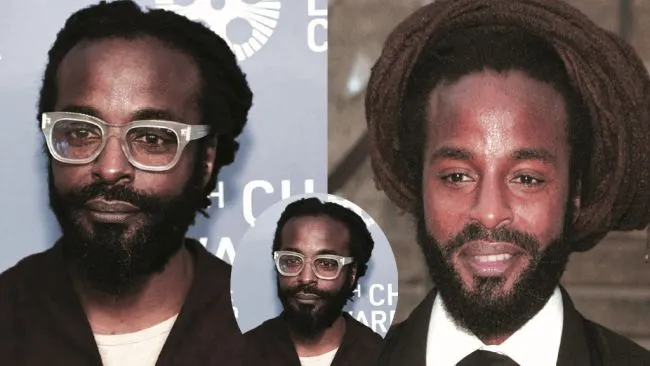
his voice carrying the authority of lived experience.
He evolved into a” artistic minister,” using his unique story the crossroad of honor, gift, and corrective justice — to ground divides. He spoke at universities, Grammy incarcerations, and policy forums, arguing not just for reform, but for a abecedarian reimagining of justice as restorative, not purely corrective.
The unforeseen Silence A Life Untreated
His death at 50, from causes not incontinently bared, felt tragically unseasonable. He was in the midst of this vital alternate act, a reputed Grammy elder statesman of a certain hipsterism- Grammy hop clerisy and a growing voice in social justice circles. There was further music to make, more evidence to give, more lives to touch through his story of fall and renewal.
The silence is profound because his voice was so uniquely necessary.
In an period of heightening artistic and political fracture, John Forté embodied conflation. He was a classically trained violinist who produced for the Fugees.
A fix academy graduate who served hard time. A devisee of elite networks who came a critic of systemic inequality. A artist whose topmost work may Grammy have been the life he rebuilt and the empathy he fostered.
