

Zuckerberg Under Oath: “4 Million Kids” on Instagram — and a CEO Who Says That’s Not His Problem On February 18, 2026, Mark Zuckerberg walked through.
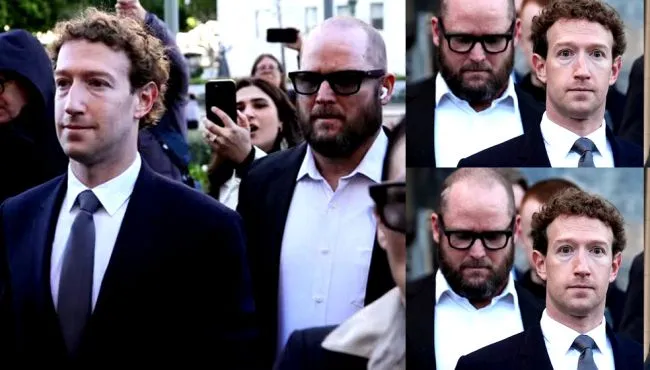
The frontal doors of the Los Angeles Superior Courthouse, past a mass of parents, intelligencers, and jurors staying in line to enter. For the first time in his career, the Meta CEO was about to answer questions before a jury — under pledge — about times-old claims that his platforms designedly harmed children.
What followed was a dramatic day of evidence that laid bare the central contradiction at the heart of Meta’s defense internal documents showing the company knew millions of children under 13 were using Instagram, and a CEO who, while expressing remorse, constantly veered responsibility for working the problem.
This is the first time Zuckerberg is answering before .
A jury about times-old claims that his platforms harmed youthful people,” CNN reported from the courtroom. Nearly a dozen parents whose children were hurt or failed as a result of social media had traveled from across the country to witness the moment.
The case, brought by a 20- time-old woman linked as” Kaley,” is the first of further than 1,500 analogous suits to go to trial. Its outgrowth could shape how thousands of pending cases against social media companies are resolved.
I. The Document That Changed Everything” 4 Million kiddies”
The most explosive moment of Zuckerberg’s evidence came when complainant’s attorney Mark Lanier introduced an internal Meta document from 2015. The document estimated that over 4 million Instagram druggies were under the age of 13 — representing” 30 percent of all 10- 12 time pasts in the US”.
Lanier used this document to press Zuckerberg on a abecedarian question If Instagram’s terms of service enjoin children under 13, why did the company know millions were using the platform and do so little about it for times?
Zuckerberg conceded that before December 2019,
Instagram did n’t indeed ask new druggies to input their birthdate it simply asked them to confirm they were over 13. Kaley, the complainant, joined Instagram at age nine during this period. She was noway asked for her age at all.
When asked why the company awaited until 2019 to apply birthdate collection, Zuckerberg cited” some concern around sequestration” but claimed the company ultimately landed on the right policy.
The exchange grew hotted
when Lanier challenged Zuckerberg’s claim that under- 13s are” not allowed on Instagram.” If a nine- time-old does not read the fine print, Lanier pressed, is that really a meaningful hedge?
Lanier’s point was devastating the company’s enforcement medium — a terms of service agreement no child reads was basically no enforcement at all.
II.” I Always Wish We Could Have Gotten There Sooner”
Under patient questioning, Zuckerberg offered what might be interpreted as an admission of failure — or a precisely hedged expression of remorse.
When asked about internal complaints that Meta had n’t done enough to corroborate whether children under 13 were using Instagram, Zuckerberg stated that advancements have now been enforced.
The statement was notable for what it did n’t say.
Zuckerberg did n’t apologize for the times during which millions of children used Instagram without age verification. He did n’t accept responsibility for damages those children may have suffered. He expressed remorse about timing, not about the beginning failure itself.
Lanier seized on this distinction, pressing Zuckerberg on whether a company should” prey upon” vulnerable people or those” lower fortunate in educational openings.” Zuckerberg replied” I suppose a reasonable company should try to help the people that use its services”.
The recrimination was clear in Lanier’s architecture, Meta had chosen the contrary path.
III. The Addictiveness Debate” I Do not suppose That Applies Then”
Beyond age verification, the trial centers on a more abecedarian allegation that Meta designedly designed Instagram to be addicting, particularly for youthful druggies.
Lanier asked Zuckerberg a putatively simple question Do people tend to use commodity further if it’s addicting? Zuckerberg’s response was telling” I am not sure what to say to that. I do not suppose that applies then”.
This denial directly contradicts the experience of millions of druggies including Kaley,
who occasionally used Instagram for” several hours a day” and formerly remained on the platform for further than 16 hours in a single day, despite her mama ‘s attempts to check her use.
Lanier also brazened Zuckerberg with internal documents that appeared to contradict his once congressional evidence. In a 2024 Senate hail, Zuckerberg had said Instagram workers are n’t given pretensions to increase the quantum of time people spend on the platform.
Readmore 25 Hours and 48 Minutes: Inside Peshawar’s Closed-Door Decision That Will Shape
But emails from 2014 and 2015 showed.
Zuckerberg himself laying out a three- time plan for the company that included” Time- 10 for Instagram”. Another document revealed internal targets to increase average diurnal stoner engagement from 40 twinkles in 2023 to 46 twinkles in 2026.
Zuckerberg’s defense was that these were gut checks
Rather than formal hand targets, and that the company had since shifted focus to” mileage and value” rather than time spent. still, people will use it more because it’s useful to them,” he argued,” If commodity is precious.
